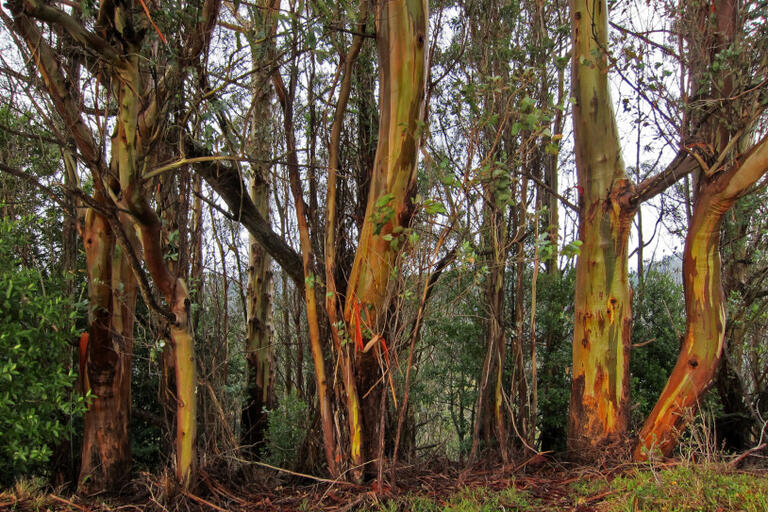
Eycalyptus can be found on the UC Berkeley campus.
The Eucalyptus Grove
In 1882, a grove of Tasmanian blue gums (Eucalyptus globulus) was planted as a windbreak for the old cinder running track. It is the tallest stand of hardwood trees in North America and the tallest stand of this type of eucalyptus in the world.
Eucalyptus were introduced to California; they have few natural herbivores, such as the koala bear, here. As a result, they look much healthier than in their native Australia.
Eucalyptus trees shed their shaggy bark. By regularly doing this, the trees also shed bark-burrowing insects that cause disease.
Source: Strawberry Creek: A Walking Tour of Campus Natural History.